Choosing between a roller and a paint pad usually happens in the aisle of a DIY shop, trolley half full and a tin of emulsion in hand. Both tools get paint onto plaster, lining paper or a tired old ceiling, but they behave very differently once you are up a stepladder. Rollers cover ground fast and leave a lightly textured film. Pads are slower, tidier, and shine on small or awkward surfaces. Which suits you depends on the room, the paint and how much patience you have that day.
How the Two Tools Actually Work
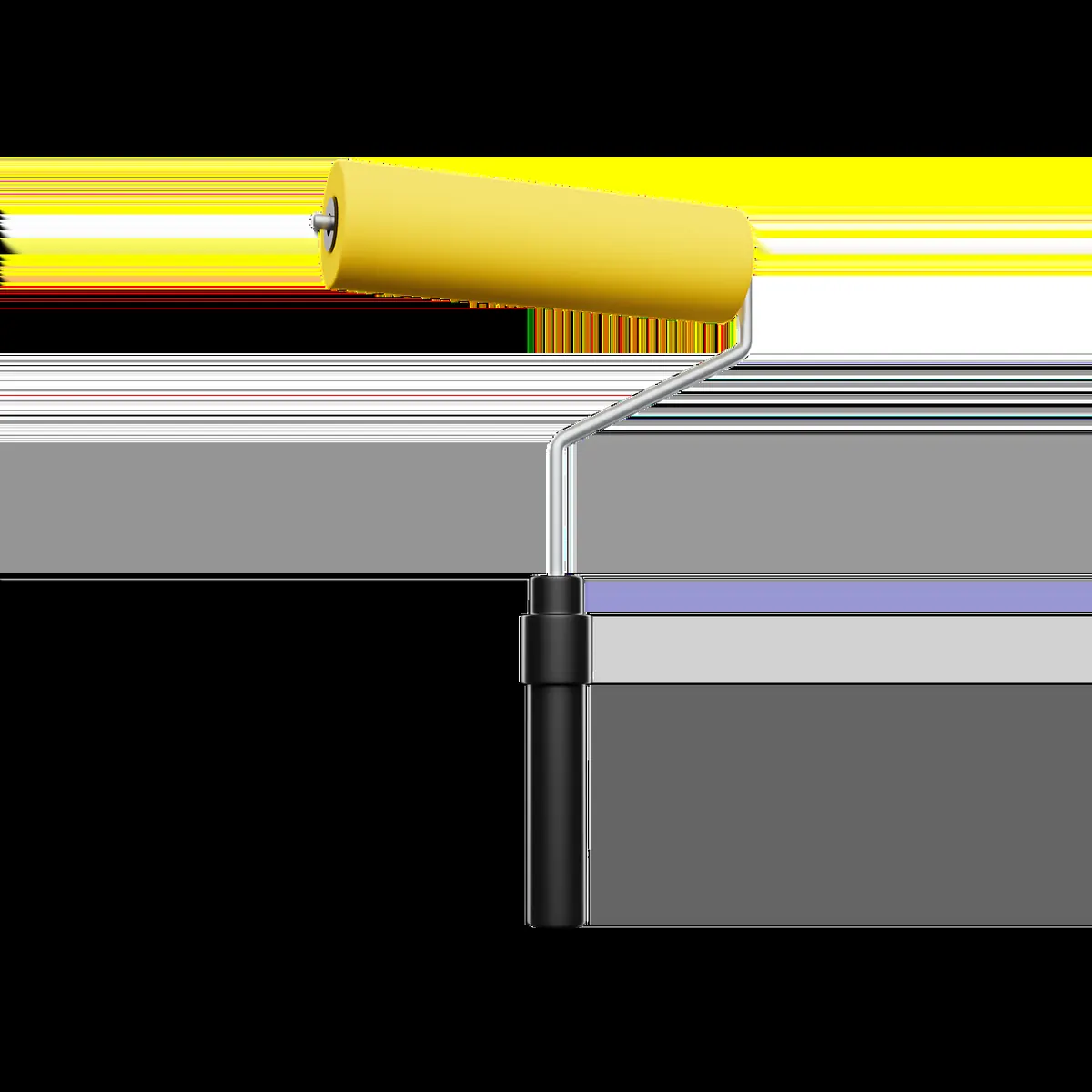
A roller is a cylinder sleeve pushed onto a frame. You load it from a tray, and the pile — the fluffy surface — holds the paint and releases it as you roll. Standard UK sleeves are 9 inches wide, with 4-inch minis for edges and radiators, and 12-inch versions for long stretches of wall. Pile length matters: short pile for smooth surfaces and gloss, medium for most emulsion work, foam for a very flat finish.
A pad is a flat block with a foam or mohair face and a handle, usually threaded to take a pole. It picks up paint the same way but applies it with flat strokes rather than rotation. Some pads have a built-in feed, though most are simply dipped and drawn across a tray.
Speed: Rollers Cover Big Walls Faster
A 9-inch roller lays a wide band of paint with every pass, and the sleeve holds enough to keep going for several strokes. On an open wall, that means fewer trips to the tray and a much shorter job. Pads hold less paint and cover a narrower strip, so a whole room takes noticeably longer.
Where pads claw back time is the fiddly stuff. A small pad run down a window reveal, behind a radiator or along a run of skirting can beat a brush and save masking. Speed also depends on the paint: thick vinyl matt drags on both tools, while a slightly thinned emulsion rolls out more freely.
Finish: Texture, Sheen and Roller Marks
Rollers leave a subtle stipple, which is why painted walls have a faint texture rather than a glassy smoothness. Medium pile gives more of it; short pile or foam gives less. Technique matters as much as the sleeve. Lay paint on in a zigzag, then roll back over the whole area in straight, overlapping lines without reloading, finishing with light pressure.
Laying off — the final, lightly loaded pass in one direction — is what separates a neat wall from a patchy one.
Pads leave a flatter film, closer to brushed or sprayed work, which is useful on eggshell and gloss where sheen shows every flaw. Press too hard and the foam deposits an uneven film; catch a bit of grit under the pad and you will drag a tramline across the wall. On matt emulsion ceilings, most people cannot tell the difference once it is dry.
Splatter, Drips and Mess
Rollers splatter, and the faster you push them, the worse it gets. Keep the sleeve properly loaded but not drowning, roll the excess off in the tray, and slow down at the end of each stroke. Long pile sleeves throw more paint than medium pile, which is one reason they are best saved for rough masonry.
Pads splash less because the face stays flat against the wall, but overload one and it drips down the handle and onto your wrist. Foam also squeezes paint out under pressure. Either way, a cotton dust sheet and a damp cloth within reach will save more time than any clever tool. If you are painting overhead, wear a cap you do not mind ruining, and keep the room ventilated — especially with solvent-based paints, where you should check the tin for the manufacturer's advice.
Cutting In, Edges and Ceilings
On ceilings
A roller on a pole wins here. You can pull it along at a steady pace, keep it loaded and reach the far end of a room without stooping. A pad on a pole tends to skate and needs more downward pressure, which is tiring and can flip the pad off the wall. Use a medium pile sleeve, roll slowly to reduce splatter, and work in bands about a metre wide so you keep a wet edge.
Cutting in
Small pads can match a brush along a ceiling line for a short run, especially on a crisp edge. Over a whole room, though, most people go back to a 2-inch brush: it holds more paint and lets you feather the edge. The reliable method is to cut in with a brush, then roll the field up to — but not over — the line.
Cleaning, Drying and Lifespan
Water-based paints wash out of both tools under warm water. Scrape the excess back into the tin or tray first: it saves paint and makes cleaning quicker.
- Scrape or squeeze the excess paint back into the tin.
- Rinse under warm water until it runs clear.
- Wash with a drop of washing-up liquid, working it through the pile or foam.
- Rinse again, then spin or squeeze out the worst of the water.
- Dry standing on end, off the floor, with air around it.
A decent microfibre sleeve will last years if it is cleaned properly, which makes paying a little more worthwhile — cheap sleeves shed fibres into the finish. Pads take longer. The foam soaks up water and paint, so you need to squeeze and rinse repeatedly, and one left damp will go musty. The fabric face can also lift from the block over time, so expect to replace pads more often than sleeves.
Which Should You Buy?
Most decorating jobs are best served by both tools, used for what they do well:
- Large walls and ceilings in emulsion: a 9-inch medium pile microfibre roller, plus a 4-inch mini for edges.
- Gloss and eggshell on doors, skirting and kitchen units: a foam roller or a pad, laid off lightly.
- Small rooms, alcoves and cupboard interiors: a mini roller and a small pad.
- Touch-ups after the furniture goes back: a pad, because there is no tray to wash up.
If you only buy one, buy the roller. It will handle the bulk of any wall or ceiling, and a brush covers the edges.
A Sensible Way to Work
Buy one good 9-inch sleeve, a mini roller, a decent brush and a pad, and you have a kit that handles almost anything. Test the finish on a scrap of plasterboard or the back of a cupboard before committing to a whole wall, particularly with gloss. Keep a damp cloth for drips, work from the top down, and maintain a wet edge so the paint blends. Whichever tool you reach for, preparation and a steady hand matter far more than the label on the packaging.Photo: dokudokunomi / Pixabay